Susan Alcorn’s Backpacking & Hiking Tales & Tips, November 2022 – blister prevention, john brierley event, Backpacker Mag last words

Susan Alcorn’s Backpacking & Hiking Tales & Tips, #277, November 2022.

Happy Thanksgiving!
John Brierley coming on zoom near thanksgiving

 Contents:

#1. World’s Oldest Restaurant: Madrid
#2. Not good! Burning Clothes and Shoes after the Camino – Fisterra
#3.
American Pilgrims: John Brierley Zoom coming up
#4.
2023 Annual Gathering of Pilgrims in Lake Tahoe, NV, April 13-16, 2023
#5. Foot care/avoiding blisters
#6. Free delivery for donations of slightly used, outdoor gear
#7. Good advice from Backpacker Magazine’s final issue
#8.
Regional (California and Baja): The Blainville’s horned lizard
#9. Regional: Bay Area Ridge Trail Hike
#10. Regional:
Jack London State Historic Park’s Ninth Annual After-Thanksgiving “Turkey Waddle,” Nov. 25, 2022

Articles:
#1.
World’s Oldest Restaurant: Madrid.

 Camino-bound and stopping in Madrid? Check out Restaurante Botín in Madrid, Spain. It’s recognized by the Guinness World Records as the oldest restaurant in the world.  “At the World’s Oldest Restaurant, the Fire Has Been Burning. Since 1725. They’ve never turned the oven off.” (Mike Pomranz, Travel and Leisure; posted by Michael Noël of the Nor Cal Pilgrim group.)

#2. Not good! Burning Clothes and Shoes after the Camino!

A number of local websites are reporting another campaign against the practice of burning boots and clothing at Fisterra. Something which locals say has given an area of natural beauty the appearance of a landfill site. Previous poster campaigns have had limited success.

Ask yourself–would like this practice carried out on a beach near you, or in your backyard? If you want to get rid of your used hiking clothes, see item #6 below and see how you can send items to an organization that will pass them on to someone else. LNT!

#3. APOC (American Pilgrims on the Camino) Zoom session.

APOC will be holding its 2nd Annual Holiday Open House on Saturday, December 10th at 11:00 a.m. Eastern Time. “There will be an hour with John Brierley, author of Pilgrim’s Guide to the Camino. In this live virtual event, John will share his inspiration and insight, from how the Camino is emerging from the COVID-19 years to his powerful personal reflections on the healing power of the Camino.

“A significant portion of this live Zoom session will be dedicated to answering your questions. Look for more information on how to register for the event through the American Pilgrims Facebook Group, on their website, and in your email if you are an #APOC member. Zoom: Registration link will be sent in an upcoming member email and event will be streamed live on the American Pilgrims Facebook Group (available to all).”

#4. American Pilgrims on the Camino — 2023 gathering.

This summer the APOC’s “planning teams provided updates regarding the 2023 Annual Gathering of Pilgrims in Lake Tahoe, NV, to be held April 13-16, 2023. Making it an international gathering is being discussed with the Canadian Company of Pilgrims. There was also consideration of proposed joint efforts with Spanish associations …”

#5. Avoiding blisters.

We all know that everyone’s feet are unique and what works for one may not work for all, but I was recently asked for my advice, and I answered as follows. Keep in mind that I had a terrible time with blisters on my first Camino hike (2001), but got the following advice from a (French) pilgrim, which has helped tremendously— as did changing from boots to trail runners (Altra Lone Peak).

I do two kinds of preventative taping. First I wrap a wide, breathable tape (Omnifix) around the ball of my foot (I have bunions). The tape is backed by paper that you easily pull off after you cut a length of it to fit. Then I wrap each toe that is prone to blisters with a one-inch tape called Medipore. The Medipore is breathable, stretchy, and soft-cloth-like. It tears off in about 1&1/2” segments; I tear off about 2-3 sections per toe. It stays on for a couple of days if needed. These products can be obtained through Amazon and many pharmacies.

In the past I have used double-layer socks such as Wrightsocks, and toe socks such as Injinji, but now I wear a single lightweight sock by Tilley, called “Unholey”, Tilley women’s ankle socks. Unfortunately, they are increasingly difficult to find (none have worn out, but just in case…) Darn Tough are tough, but also heavier than I prefer.

Other things to consider—it you are expecting to encounter a lot of loose dirt, or sand, you should consider a lightweight gaiter like the fun ones Dirty Girl Gaiters dirtygirlgaiters.com  offers. Blisters are generally caused by friction (abrasion or rubbing) and heat — and/or by ill-fitting shoes or socks.

When hiking, always take care of hot spots right away; take off shoes and socks to let things cool. Popping a blister is usually not a good idea because it can introduce bacteria and cause an infection. But if the #blister is large and painful, it might be necessary. If you choose to do so, be certain the needle, your hands, and any other material are sterile. Do not pop a blister than has blood in it or any other sign of infection. If you develop a blister, it usually will take a week to go away. You can cover it with a special bandage for blisters if necessary.  

#6. Wanted!! All that gear you never use: Outside’s Gear program, Give Back.

Three simple steps: pack up your gently used items, print a shipping label, and send them off (free in the U.S) to the Gear Fix. Their repair partner prepares items to be resold and to benefit the Outdoorist Oath (advocates for environmental justice and an inclusive outdoors.” oursideoline.com/give-back

#7. Sound advice from Backpacker Magazine.

The last issue, as I understand it, of the print edition of Backpacker Magazine, is the Fall 2022. It’s an interesting comparison of the advice and practices in the early days of the magazine (which goes back 50 years), and of that given and favored now.
Hiking poles: Adjustable poles came about in the 1960s. German Karl Lendhart, a skier, came up with a locking system. The system, “patented for the first adjustable pole—the Leki Makalu—is still in use today.”

Trail running shoes: When I first started backpacking in 1989, I wore the kind of footwear that most other hikers were wearing — boots. However, choices have widened! “Last year, a thru-hiker survey found that 77% of Appalachian Trail Thru-hikers wore trail running shoes. “ The 2011 release of Altra’s Lone Peak model, changed things dramatically, and they have become the overwhelming favorite.  Credit the “breathable mesh upper, chunky lugs, cushy midsole, zero drop heel, and a wide, foot-shaped toe box.” (Backpacker.com Fall 2022)

#8. Regional (California and Baja): The Blainville’s horned lizard.

Have you ever seen one? Looking at an earlier (Spring 2022), copy of Bay Nature Magazine, I stumbled again on an article about this amazing reptile. It “is endemic to California and Baja, eats native harvester ants, and as a defense of last resort, squirts blood from its eyes.” The article continues, “the blood can reportedly reach six feet forward or backwards”— chiefly to startle coyotes, foxes, and dogs (it would startle me too!). Put this on your calendar to do a search next spring in our South and East Bay Counties. 

#9. Regional: Bay Area Ridge Trail.

After a delightful time at a recent event—where I was invited to give a talk on Walk, Hike, Saunter: Tales and Tips from Seasoned Women Hikers—I found a renewed interest in circumnavigating our amazing trail.
For those who aren’t familiar with the #Ridge Trail, it’s a planned 550-mile (890 km) multi-use trail along the hills and mountain ridgelines circling San Francisco Bay and more. Currently, four hundred miles are currently open. Link to Ridge Trail

With my hiking partners, Patricia Schaffarczyk, Tom Coroneos, and Ralph, we recently did another section-hike on the San Francisco peninsula. We started at the North Parking lot of Purisima Creek Redwoods (off Skyline/hwy 35) and ended at the South End Parking lot of Purisima Creek Redwoods. It was 5.8 miles of gentle descent (1000 ft.) and ascent through wonderful redwoods with occasional sightings of the ocean.

One of the things that struck me was that (except for an occasional airplane) it was absolutely quiet once we were away from the highway. On the weekends, it would be busier, but on this weekday, we saw only three other people.

#10. Regional: Jack London State Historic Park’s Ninth Annual After-Thanksgiving Turkey Waddle.

The Day-After-Thanksgiving Turkey Waddle Hike at Jack London State Historic Park sets the pace for a healthy holiday season. That’s Friday, Nov. 25, 2022. “…The annual Turkey Waddle Hike lets everyone get out and ‘shake their tail feathers’ after a day of feasting and football.

This moderate 3.5-mile hike leads through mixed evergreens on the way to the majestic Ancient Redwood (also affectionately known as the Grandmother Tree).
Waddlers, will gather at 10 a.m. in the Ranch parking lot to the right of the entrance kiosk.  The hike will end at noon.  The event will be cancelled in the event of rain. Great for all ages, participants should wear sturdy shoes and bring water.  The trail includes uneven and rocky surfaces and involves some elevation gain and loss.
“Reservations are required and can be made at jacklondonpark.com/events/turkey-waddle-2022/.   Tickets are $10, plus the $10 per car entry fee (up to nine passengers).” More info at: jacklondonpark.com/events/.

+++++
Thank you everyone. Stay well, keep hiking when prudent. I encourage you to send in items of interest to the hiking community to me at backpack45 “at sign” yahoo.com
Susan ‘backpack45’ Alcorn
Shepherd Canyon Books, Oakland, CA
susandalcorn.com
backpack45.com

Author of Walk, Hike, Saunter: Seasoned Women Share Tales and Trails; Healing Miles: Gifts from the Caminos Norte and Primitivo; Patagonia Chronicle: On Foot in Torres del Paine; We’re in the Mountains Not over the Hill: Tales and Tips from Seasoned Women Backpackers; and Camino Chronicle: Walking to Santiago.

Please note: Hiking and backpacking can be risky endeavors. Always be prepared for emergencies and carry food, water, shelter (warm clothing, etc.), flashlight/headlamp, matches, first aid supplies, and maps. Cell phones don’t always work. Leave word where you are traveling and when you are due back.
Book Talk and Walk in Sonoma

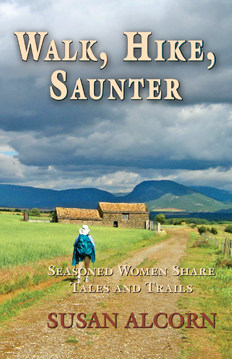
walk hike saunter book cover image for book talk and walk in sonomaApril 10, 2022. Bay Area Book talk and walk.

Please join us for a reading and discussion about my newest book, Walk, Hike, Saunter: Seasoned Women Share Tales and Trails at Readers’ Books in Sonoma, CA on Sunday, April 10, 2022. 10:30 for the talk and reading; 3-mile hike to follow (the hike is optional, of course). Event is free and open to all. 

Joining me will be four of the women from the book:  Inga Aksamit, Patricia Schaffarczyk, Jane Toro, and Karen Najarian. They will read a bit from their chapters, perhaps talk about their previous or upcoming hikes. I can guarantee that they will be inspiring!

A hike will follow—but note: trail changes!!! We are going to lead a hike, but due to trail restoration, we have had to change from going to the overlook (top) of Overlook Trail. We still plan to lead an easy uphill hike, but though it will start on the Overlook Trail, it will continue onto another trail (also offering great views). I plan to scout the alternate route out this week—it will be a fun walk for all of us.

Click here for trail info to find the parking lot for the HIKE, and the beginning of the Overlook Trail. I’m sure than some hikers will be fine without hiking poles, but expect some roots and rocks, so bring a pole if you’ll feel safer.  
Readers’ Books is at 130 E Napa St., Sonoma (and right off the main square).

Susan Alcorn’s Backpacking & Hiking Tales & Tips, February 2022

Susan Alcorn’s Backpacking & Hiking Tales and Tips, #271, February 2022

Contents:
1. Yosemite news: volunteering, jobs, and activities
2. Hospitalero Training
3. Gossamer Gear’s blog
4. Leave No Trace Outdoor Ethics for the Camino de Santiago
5. What you should know about Banana Slugs
6. Regional: Susan’s Bay Area book talk with walk following

Articles:
#1. Items from the Yosemite Conservancy Newsletter of January 2022. If you are heading for Yosemite in the next few months, check current road conditions and tire chain restrictions by calling (209) 372-0200 (press 1, then 1).

“In other news, we’re hiring a Staff Accountant (based in San Francisco), an Outdoor Programs Coordinator (based in Yosemite), and a Marketing Coordinator (location flexible). Know someone who’d be a good fit for our team? Click here to apply

In addition “Volunteer in Yosemite in 2022: Enjoy a week in the park while completing physical restoration projects including trail repairs, habitat rehabilitation, and more by joining a Work Week Crew. Spend a month sharing your Yosemite knowledge to help visitors navigate and enjoy the park as a Visitor Information Assistant. Apply Now. Click here for volunteering.

Yosemite Conservancy has many custom adventures and virtual adventures. Here are their “upcoming winter adventures in the park. February 12: Winter Hike in Mariposa Grove; February 15: Full Moon Snowshoe Hike #2; February 19: Winter Hike in Mariposa Grove.” These may be full, but there will be more during the year. info@yosemite.org and  www.yosemite.org

#2. Camino Hospitalero Training, March 29-31, 2022. Registration is open for the first Hospitalero Training session of 2022! This is right before the Annual Gathering of Pilgrims as mentioned in my January newsletter (March 31, 2022 – April 4, 2022). The training session will be held at the YMCA Blue Ridge Assembly in Black Mountain, NC (near Asheville).

Schedule: Check-in: 4:00 PM on Tuesday, March 29, 2022—Training complete: 5:00 PM on Thursday, March 31, 2022. “You must attend the entire training session to be certified!  Make your travel plans accordingly! If you plan to attend the Gathering there is a separate registration. Follow this link for Gathering information.

“Checklist: Do you want to learn what it takes to become a hospitalero supporting other pilgrims on the road to Santiago? To attend you must: Have walked at least 100 km or biked at least 200 km of the Camino. Have stayed in at least 3 non-private albergues. Be a current member of American Pilgrims on the Camino. Be at least 18 years old by March 28, 2022. Provide proof of COVID vaccination plus the Booster. Note: all attendees are required to wear masks during the training.”

Click here. to register for Hospitalero Training or questions to: hospitalerotraining@americanpilgrims.org

#3. Short film on the incredible hiker, Anish—and more from Gossamergear.com A wealth of articles in Gossamer Gear’s blog: This month, I particularly enjoyed  the new film on Heather Anderson’s (aka Anish) Thru-Hiking FKT Journey AND Korrin Bishop’s “7 Tips to Quiet Your Mind While Hiking or Backpacking.”  https://www.gossamergear.com/blogs/our-blog

#4. Leave No Trace Outdoor Ethics for the Camino de Santiago. Important reading for Camino-bound travelers. https://lnt.org/wp-content/uploads/2020/03/Leave-No-Trace-Camino-Version_FINAL_2020.pdf

#5. What you should know about Banana Slugs. I have to admit that banana slugs are not my favorite critter, but they are interesting. So, did you know that they are soft-bodied creatures without a backbone and are mollusks related to snails and sea slugs? They are gastropods. You probably haven’t one seen a nose sticking out—that’s because it breathes through what is called a pneumostome, a breathing hole on its side leading to its one lung.

They are native to North America and they generally can be found in habitats offering shaded and damp conditions. They travel on the trail of slime they produce; the slime protects their body and discourages predators because the slime tastes bitter and can make one’s tongue feel numb for a moment.  

At the front, they have two sets of tentacles: the upper set is sensitive to light; the lower set is for smelling and feeling. It used to be that teachers and others would encourage students and other visitors to parks to kiss a slug, but this is no longer recommended because the slime can carry parasitic worms and mites, plus lotions humans might have on their hands can be harmful to the slugs. More info in Bay Nature Magazine.  Click here to read

#6. Regional: Susan’s Bay Area book talk and walk. Save the date (and confirm closer on because we all know dates for events sometimes change), but currently we are scheduled to give a book event in Sonoma, CA on Sunday, April 10, 2022. 10:30 for the talk and reading; 3-mile hike to follow.

Details are developing, but what I am hoping for are a couple of the women from Walk, Hike Saunter: Seasoned Women Share Tales and Trail to join in and read from their chapters OR talk about their upcoming hikes. I can guarantee that they will be inspiring!

Following the talk, we plan to lead a gentle hike to an overlook in a local open space with a terrific view of not only Sonoma, but also south to San Francisco and more. Readers’ Books is at 130 E Napa St., Sonoma (and right off the main square). Click here for trail info. We scouted out the trail recently and found that it can be done without hiking poles, but there are some roots and rocks, so bring a pole if you’ll feel safer. 
~~~~~~~~~
Thank you everyone. Stay well, keep hiking when prudent. I encourage you to send in items of interest to the hiking community to me at backpack45 “at sign” yahoo.com

Susan ‘backpack45’ Alcorn
Shepherd Canyon Books, Oakland, CA
https://www.susandalcorn.com
https://www.backpack45.com

Author of Walk, Hike, Saunter: Seasoned Women Share Tales and Trails; Healing Miles: Gifts from the Caminos Norte and Primitivo, Patagonia Chronicle: On Foot in Torres del Paine; We’re in the Mountains Not over the Hill: Tales and Tips from Seasoned Women Backpackers; and Camino Chronicle: Walking to Santiago.

Please note: Hiking and backpacking can be risky endeavors. Always be prepared for emergencies and carry food, water, shelter (warm clothing, etc.), flashlight/headlamp, matches, first aid supplies, and maps. Cell phones don’t always work. Leave word where you are traveling and when you are due back.
Susan Alcorn’s Backpacking & Hiking Tales & Tips, December 2021

Susan Alcorn’s Backpacking & Hiking Tales and Tips, #269 December 2021

Hi everyone,
Happy Holidays to you and yours!

Sorry if you’ve gotten any extra emails about our newsletters. It’s because of our change to wordpress for sending out the newsletter through my website www.susandalcorn.com We have a few more things to learn!

Contents:
#1. Three Books I Highly Recommend:
#2. “Footprints the People”— Barbara Anderson’s humorous podcast on hiking
#3. At 83, ‘Nimblewill Nomad’ Sets Record on the Appalachian Trail
#4. Camino: Train schedule (new service) Madrid to Galicia. 
#5. Andrew Skurka: Have fun while learning about backpacking from an expert
#6. Camino news: Yikes! Part of the arch at San Anton fell on a school bus
#7. The youngest calendar year triple crowners!
Regional San Francisco Bay Area:
#8.New Year’s Day Sonoma County Hike
#9. Bay Area Ridge Trail: Peninsula. Skyline College to Mussel Beach.
#10: Reminder: King Tides on coastal areas

Articles:
#1. A. Three books I can recommend: First is my Walk, Hike, Saunter: Seasoned Women Hikers Share Tales and Trails, which would be perfect for anyone who enjoys an inspiring, interesting, and entertaining book full of stories of adventuresome women. All of the 32 women are 45 or older—some have been “firsts” in the hiking world, all are excellent role models that have much to offer newer hikers. Link here

Heather Anderson’s latest newsletter announced that she has now received the 4th printing of her book, Thirst: 2600 miles to home. She also is offering a course in January called, “FKT 101: Basics for Planning and Completing your First Fastest Known Time Course.” Link here

From her website, “National Geographic Adventurer of the Year, Heather Anderson is the only woman who has completed the Appalachian, Pacific Crest and Continental Divide National Scenic Trails each three times. This includes her historic Calendar Year Triple Crown hike in 2018 when she hiked all three of those trails in one March-November season, making her the first female to do so.

“She also holds the overall self-supported Fastest Known Time (FKT) on the Pacific Crest Trail (2013)–hiking it in 60 days, 17 hours, 12 min, which broke the previous men’s record by four days….” “She also holds the female, self-supported FKT on the Appalachian Trail (2015) in a time of 54 days, 7 hours, 48 minutes, and the Arizona Trail (2016) which she completed in 19 days, 17 hours, 9 minutes.”

Yosemite Complete Hiking Guide by Elizabeth Wenk is out! This book includes every trail in the park and many in adjacent wilderness areas—more than 1,000 miles of trail. As with the previous edition, there is a detailed introduction to the park’s natural history, human history, and of course planning material, most of it entirely rewritten. In addition, there are new maps for every hike. There are lots of new geology and biology sidebars to enhance the trail descriptions. Link here.   (Thank you, Jaunting Jan for the news!).

#2. “Footprints the People” is an entertaining podcast with Barbara Anderson (contributor to Walk, Hike, Saunter). She writes, “thought you might enjoy or possibly laugh at my interview for a British podcast on Long Distance walking….. “Footprints The People Podcast Barbara Anderson ” GOOGLE if you cannot reach Spotify. Link here.

#3. 83 year-old ‘Nimblewill Nomad’ Sets Record on the Appalachian Trail. M.J. Eberhart, better known to hikers as Nimblewill Nomad, hiked into Dalton, Mass., on Sunday, November 7 to become the oldest known person to hike the roughly 2,190-mile trail miles of trail from Georgia to Maine. 

“Eighty percent of it is mental grit,” he said. “And that is why so many people fail.” He was celebrated by many at the finish line, including former record holder “Grey Beard,” (Dale Sanders, now 86) who had held the title since 2017. Grey Beard had driven up from his home in Tennessee to walk the final miles with Nimblewill Nomad

Nimblewill Nomad did the entire hike, in sections, in one year. He actually began hiking from his home in Alabama, which is further back—doing day hikes—until he reached Georgia to jump on the AT on March 1, 2021. He averaged about 10 miles a day. He had previously completed the AT twice—1998 and 2001-2. There’s more in an article by Christine Hauser in the New York Times. Link here. 

Earl Shaffer is the first known person to hike the entire length of the Appalachian Trail in one, continuous journey, which he did in 1948.

#4. Camino interest: Train schedule (new service) Madrid to Galicia. Follow the link to the schedule. The labels at the top of each train schedule can be confusing, so here are their meanings:
LMXJ — means Monday through Friday
LMXJS — Monday through Saturday
LMXJD – Monday through Friday and Sunday
diario — daily
Link to credit 

#5. Andrew Skurka Adventures: “Our 2022 trip schedule is now available. April/May: Grand Staircase-Escalante in southern Utah; May: Great Sand Dunes National Park in Colorado; June/July: Gates of the Arctic National Park, Brooks Range, Alaska; July: High Sierra, California; September: Olympic National Park, Washington (new for 2022); October: West Virginia during peak fall colors.”

If you aren’t acquainted with Andrew Skurka, here’s info about him: “I’m an outdoor athlete, writer, and guide. In my twenties I hiked 30,000+ miles from sea to sea, around the West, and in Alaska. Since then I started a guide …” from his website at https://andrewskurka.com

Apply for a 2022 trip starting Monday, December 13, 2021 [places will fill fast]. 
Benefit from:
“Next-level instruction. We will help you develop the skills and knowledge necessary to lead the group and to undertake similar trips of your own in the future. The learning starts months before with our Plan Like A Pro course, and continues with an extensive field curriculum.
“Expert guides. We combine extensive first-hand backpacking experience with excellent people skills, relate-able family and work lives, and a passion for teaching and for our trip locations. It’s truly an all-star team.
“World-class locations. Our venues are among my all-time favorite spots, and we know where to find spectacular scenery, refreshing swimming holes, fascinating archeological sites, blissful off-trail travel, and secluded campsites.
“Cohesive groups. We painstakingly match applicants who have similar physical abilities and outdoor experience, and we try to give each group a balance of genders, ages, and other biographical details. Our groups frequently feel like “tramilies” and plan trips together afterwards.”

#6. Camino news: Yikes! Part of the arch at San Anton (on the Francés route) fell and landed on a school bus. Luckily no one was injured. Article here.  

#7. 21-Year-Olds, Sammy Potter and Jackson Parell, Just Became the Youngest Calendar-Year Triple Crowners. To make their way through the challenges of weather, they bounced around on the three trails — over 7,000 miles of hiking that covers the Appalachian Trail, the Pacific Crest Trail, and the Continental Divide Trail. 

They started on January 1, 2021 on the Appalachian Trail’s southern end at Springer Mountain. In February the moved over to the Continental Divide in New Mexico; they moved over to do a section of the Pacific Crest Trail headed south from Kennedy Meadows. They finished their record-setting hike on October 22, 2021. There is more to the story, which you can read at link here

Flyin’ Brian Robinson was the first person to complete a Calendar-Year Triple Crown in 2001. And, as mentioned earlier, Heather “Anish” Anderson, was the first woman to do so.

Regional Bay Area:
#8. Jack London State Historic Park First Day Hike. The park, in California’s Sonoma Valley, kicks off the new year with Ninth Annual First Day Hike – January 1, 2022.  The trek can be either a personal challenge to make it to the park summit or the first step in a commitment to a healthier new year.  Either way, it is designed for all fitness levels with guides to help hikers return to the parking lot at any time. First Day Hikes are held throughout the country, supported by America’s State Parks, and at parks statewide with California State Parks.

The hike begins at 10 a.m. and will conclude at around 2:30 p.m. The roundtrip route is eight miles long and moderately strenuous. Participants will meet in the Ranch parking lot, to the right of the park’s entrance kiosk.  The hike will be cancelled in the event of rain.

Reservations are required https://jacklondonpark.com/events/ and can be made at First Day Hike 2022 | Jack London State Historic Park (jacklondonpark.com). Tickets are $10 per person, in addition to $10 per car entry fee (up to nine passengers).  (Thank you Laurie Armstrong Gossy for the news.) Photo: Jack London’s Wolf House.

#9. Bay Area Ridge Trail. While waiting for longer days to complete the Nifty Ninety Peak Challenge, we are enjoying doing sections of the Bay Area Ridge Trail. Our most recent hike was on the S.F. Peninsula in Pacifica. What a delightful segment—from Skyline College to Mussel Beach. Short as most of the sections are, but from our start at the southern end of the walk, we went through the GGNRA Milagra Park, with displays with information about the former Nike Launch site that was there during the Cold War era of the 40s and 50s, and then onward along wonderfully well-groomed trails that took us to a spiral (related to a labyrinth) with outstanding views all along. Then down the hillside to walk along the cliffs above the ocean north to the end at the picturesque Mussel Rock. It’s about 4.5 miles, but we did a bit more to see the off-trail views. Easy, going north is downhill.

#10. REMINDER: King Tides near you? “A King Tide is a non-scientific term people often use to describe exceptionally high tides. Tides are long-period waves that roll around the planet as the ocean is “pulled” back and forth by the gravitational pull of the moon and the sun as these bodies interact with the Earth in their monthly and yearly orbits. Higher than normal tides typically occur during a new or full moon and when the Moon is at its perigee, or during specific seasons around the country.” National Ocean Service info. 

Here’s a Bay Area walk you can take with Berkeley Path Wanderers: “King Tides Walk: History and Rising Seas.” When: Sunday, Dec. 5, 10 a.m. Leader: Susan Schwartz. Sea Breeze Market, 598 University Ave., Berkeley.

“During one of winter’s highest tides, enjoy a relaxed loop around Berkeley’s restored “meadow,” with short spurs. We will walk rain or shine. Dress in layers for quick-changing weather, and expect puddles, muddy or even flooded paths, and crossing a construction site. Sorry, no dogs allowed in part of the area we will cross.
+++
Thank you everyone; enjoy your holidays. Stay well, keep hiking when prudent. I encourage you to send in items of interest to the hiking community to me at backpack45 “at sign” yahoo.com

Susan ‘backpack45’ Alcorn
Shepherd Canyon Books, Oakland, CA
https://www.susandalcorn.com
https://www.backpack45.com

Author of Walk, Hike, Saunter: Seasoned Women Share Tales and Trails Healing Miles: Gifts from the Caminos Norte and Primitivo
Patagonia Chronicle: On Foot in Torres del Paine
Camino Chronicle: Walking to Santiago
We’re in the Mountains Not over the Hill: Tales and Tips from Seasoned Women Backpackers
Please note: Hiking and backpacking can be risky endeavors. Always be prepared for emergencies and carry food, water, shelter (warm clothing, etc.), flashlight/headlamp, matches, first aid supplies, and maps. Cell phones don’t always work. Leave word where you are traveling and when you are due back.


Susan Alcorn’s Backpacking & Hiking Tales and Tips, #268 Nov. 2021

Hi everyone,
It’s good to be back in the Bay Area for Thanksgiving and all of the other fall events. There wasn’t an October issue of this newsletter because Ralph and I were in France completing the last section of the Chemin Vézelay pilgrimage route (plenty more about that below).

Contents:
#1. Susan’s book party/event for Walk, Hike, Saunter: Seasoned Women Hikers Share Tales and Trails—and some of the women featured!
#2. Opossums: How much do you know about this marsupial?
#3. Chemin de Vézelay (pilgrim route through France)
#4. Supporting American Pilgrims on the Camino
#5. Regional: Free admission to our National Parks for veterans and active military on Veterans’ Day and through the weekend, Nov. 11-14, 2021
#6. Regional: Sonoma County: Geyserville, Northern CA. — the Geyserville Tree Lighting and Tractor parade.
#7. Regional and widespread: King Tides will be happening soon.

Articles:
#1. Susan to host a book party/event: We’re going to feature my most recent book, Walk, Hike, Saunter: Seasoned Women Hikers Share Tales and Trails at Book Passage Corte Madera, CA on Nov. 13, 2 PM. And, some of the women whose stories are in the book will also be reading. We’ll be talking about some of our trail adventures, and encouraging other to enjoy some of the rewards (and challenges) of hiking and backpacking.

We would appreciate an RSVP if you are coming so we can have enough seating and goodies. To rsvp, follow this link: http://evite.me/t5GC9dWDjU

However, no registration required so come on by if you can. Free to celebrate with us and enjoy a bit of wine and munchies! (We will be inside for the book event, and outdoors for the snacking!). Book Passage, Corte Madera, is 51 Tamal Vista Blvd, Corte Madera, CA 925-927-0960.
#2. Opossum or possum? Either is ok. Most English speakers call it possum, whereas most scientists refer to it as Opposum, or more technically the Virginia Opposum (Didelphis virginiana). Whichever term you prefer, it is found from southern Canada to northern Costa Rica, and is the only marsupial found north of Mexico. Its furless hands, short legs, and heavy body make it unsuited to snowy areas, but researchers have observing that it’s range is gradually expanding with climate change.

Marsupial? Yes, it has a pouch—at least the all female opossums do. And, the male Water Opossum, found in Central and South America, is the only living species where both females and males have pouches. The male water opossum uses its pouch to hold and protect its genitals during swimming.

But back to the Virginia Opossum—baby opossums are only about the size of a jelly bean when born. The “joeys” crawl to the pouch and attach themselves to one of the mother’s teats where they will stay for eight weeks. After they have matured, they climb to the mother’s back where they will spend another two months learning survival skills.

If you have seen one living near your home, it means you have supportive habitat: water within 10 square city blocks and food (dead animals, bugs, ticks, fruit, and vegetables). If you see them out and about, you are probably outdoors after dark, because Opossums are nocturnal. There probably are trees nearby because that’s their preferred home, but I have seen them living in thickly-covered vines growing on fences. Like our new-world monkeys, opossums have prehensile tails—they can hang by their tail and use their hands to hold onto branches and so forth. Their opposable thumbs help with this effort.
#3. Chemin de Vézelay: There are four major pilgrimage routes in France: from Paris, Vézelay, LePuy-en-Velay, and Arles to Santiago de Compostela. Ralph and I have now competed three: the Vézelay, the GR 65 from Geneva to LePuy-en-Velay continuing on from LePuy into Spain; and the GR653 Arles route into Spain. (We did the Frances route through Spain in 2001)

We did each of the French routes in sections. With Vézelay for example: Vézelay to Saint Amand Montrond; Saint Amand Montrond  to Limoges; Limoges to Bazas (near Bordeaux), and Bazas to St. Jean Pied du Port (in the foothills of the Pyrenees—a popular town for beginning the Frances route to Santiago de Compostela).

The charming village of Vézelay is in the north-central part of France. It is partially protected from attack by its hillside location and stone walls partially surrounding it. It entered into history in the 9th century, when it first hosted the relics of Saint Mary Magdalene. It became even better known when its 11th-century Romanesque Basilica of St Magdalene was constructed, and subsequently when the Third Crusade (1189–1192) aka “The Kings’ Crusade,” set out from there. It is now a designated UNESCO World Heritage Site. 

The historical route was “described by Aimery Picaud in his 12th century Pilgrim’s Guide. It was used by pilgrims coming from the north (Scandinavians) and the east (Poles, Germans) of Europe, and sometimes called also the Polish route. Its Latin name, the Via Lemovicensis derives from its crossing of the Limousin, and from the historical, religious and cultural importance of the city of Limoges.”

The route runs southwest from  Vézelay (in Burgundy),  There are two distinct branches, the Bourges and Nevers routes (the one we took), which meet in the village of Gargilesse.

The Bourges route “is slightly shorter and much flatter, with many large forests and cornfields, and so to some, more monotonous. Bourges Cathedral is well worth a visit and some say this city is more interesting than Nevers. The Nevers route, also passing through Saint-Amand-Montrond and La Châtre is 31.6 km longer than the Bourges route, unless the variant via Augy-sur-Aubois is chosen which halves the extra distance. The terrain is more undulating and varied, and Nevers has the shrine of Saint Bernadette Soubirous (of Lourdes) which is a pilgrimage centre in its own right.

“The route then continues across the foothills of the Limousin, the hills and valleys of the Périgord and the plains of Aquitaine and the Landes. It joins the two other routes (from Tours and le Puy-en-Velay) near Ostabat.”

It’s approximately 900 km from Vézelay to St Jean Pied-de-Port, and a total of 1700 km if you continue to Santiago. Although guidebooks may divide it into 36 stages, of 20 and 30 km, we generally did shorter walks depending upon the accommodations available.

The route is waymarked, but is slowly moving to change the markings from the earlier red and white or red and yellow, to the yellow and blue that you’ll see on the Frances.

The scenery is quite varied: hills, valley, forests, historic sites and monuments. It’s primarily small towns, many losing population as young adults move the larger cities for work. However,, there are also some beautiful cities—including Saint-Léonard, Limoges, and Périgueux.  The Limousin is a land of forests and springs, of extensive cattle and sheep-raising.

In the Gironde, you’ll come across vast vineyards with the grapes for Bergerac and Bordeaux wines. As you continue south, you’ll find plantation farms with pines interspersed with fields of corn and some sunflowers. In wilder forests you find more variety— including oaks and deciduous trees and rich understory plants. On the last one or two days approaching St. Jean, you’ll have a couple of steep climbs with extensive views of the Pyrenees ahead and the plains behind you.

Walking the Vézelay is a very different experience than walking the Frances. As the CSJ says in their write up, “It is a route for pilgrims who are looking for tranquility and a meditative environment.” Translated that means — except in the larger cities, on market days, or during festival, you will see very few people. Most days we didn’t see anyone on the trail.

We stayed in a variety of accommodations, but there was seldom any choice. A back bedroom, a pilgrim refuges, small or large hotels, chambres d’hôte (bed & breakfasts), or gîtes d’étape. “The route has simple but sufficient facilities, calling upon the rigour of the pilgrim’s commitment (whatever his deeper underlying motive), in the context of a relatively deserted rural environment sufficient to discourage the ‘tourist’, and to deter therefore all those who embark on the pilgrimage in a spirit which is not ‘serious’ (i.e. who want simply to ‘play at’ being a pilgrim).” Quotations from the Confraternity of St. James, based in London. 


Guidebooks: The Dutch Pilgrim Association has produced two guides in English (updates 2021) from Vézelay to Saint-Jean-Pied-de-Port: one covers the variant via Nevers and the other of the variant via Bourges. These are available as books or free in PDF format, santiago.nl/english/vezelay-main-page. The main page will orient you, the “Tracks and Guides” section shows maps and trails in detail. (Both the Nevers and the Bourges books are available from their online shop.)

We also used the Miam Miam Dodo: Voie de Vézelay (2019), which is available from the Confraternity of Saint James. It is in French, but easily understood by those of us who are not fluent in that language!

#4. Supporting American Pilgrims on the Camino. APOC is just what it sounds like, an organization primarily for those of us in the U.S. who want information about the Camino and to support the infrastructure of the Camino with grants for various projects undertaken by various non-profit albergues, etc. Membership includes a subscription to the quarterly publication of La Concha. There is also a Facebook group for meeting with new and experienced pilgrims. www.americanpilgrims.org

It is also a place to find a local chapter near you. Activities vary, but may include getting together for coffee, a potluck, or a hike. Our Peregrinos — Northern California chapter not only has walks and hikes, but also has informative meetings about such topics as how to get ready for a Camino walk to how to reenter the “real world” after your pilgrimage.

#5. Veterans, active military, and Gold Star Families: Free admission to  U.S. National Parks for veterans and active military on Veterans Day and through the weekend, Nov. 11-14, 2021.  https://www.nps.gov/planyourvisit/veterans-and-gold-star-families-free-access.htm

I recently visited Jack London State Park and can vouch for its attractions–beautiful views, historic buildings, and hiking trails. They are eager to welcome visitors. They write, “In recognition of their service to the United States, Jack London State Historic Park [in Glen Ellen, CA] will provide free admission to all active-duty military and veterans on Veterans Day and through the following weekend…” “An active duty or retired military identification or form DD214 can be presented at the entry kiosk to receive the free admission. Admission, regularly priced at $10, covers one vehicle of guests (up to nine people) for the day.  Park hours are 9 a.m. to 5 p.m. daily”

“Blending the fascinating history of one of America’s most prolific and successful writers with the serenity of nature, Jack London State Historic Park offers more than 29 miles of back-country trails that roam through mixed forests, redwood groves, oak woodlands, and grassy meadows in Sonoma County’s Valley of the Moon.  Learn more about the park at https://jacklondonpark.com/

 #6. Regional: Geyserville Tree Lighting and Tractor parade. Saturday, November 27, 2021 – 4:30pm-8:00pm.Downtown along Geyserville Avenue, Geyserville, CA, 95441 (Sonoma County/Nor. CA).  Geyserville Chamber of Commerce https://geyservillechamber.com/
Local:  707-276-6067. email: geyservillechamberofcommerce@gmail.com
Combine a hike in the area and then watch the festivities. Saturday, November 27, 2021 – 4:30pm-8:00pm.

#7. King Tides near you? “A King Tide is a non-scientific term people often use to describe exceptionally high tides. Tides are long-period waves that roll around the planet as the ocean is “pulled” back and forth by the gravitational pull of the moon and the sun as these bodies interact with the Earth in their monthly and yearly orbits. Higher than normal tides typically occur during a new or full moon and when the Moon is at its perigee, or during specific seasons around the country.” National Ocean Service https://oceanservice.noaa.gov/facts/kingtide.html

Here’s a related Bay Area walk you can take with Berkeley Path Wanderers: “King Tides Walk: History and Rising Seas.” When: Sunday, Dec. 5, 10 a.m. Leader: Susan Schwartz. Sea Breeze Market, 598 University Ave., Berkeley. Click here for info.

“During one of winter’s highest tides, enjoy a relaxed loop around Berkeley’s restored “meadow,” with short spurs. We will walk rain or shine. Dress in layers for quick-changing weather, and expect puddles, muddy or even flooded paths, and crossing a construction site. Sorry, no dogs allowed in part of the area we will cross.”
++++++++++++++++++++
Thank you everyone. Stay well, keep hiking when prudent. I encourage you to send in items of interest to the hiking community to me at backpack45 “at sign” yahoo.com

Susan ‘backpack45’ Alcorn
Shepherd Canyon Books, Oakland, CA

https://susandalcorn.com
https://www.backpack45.com

Author of Walk, Hike, Saunter: Seasoned Women Share Tales and Trails; Healing Miles: Gifts from the Caminos Norte and Primitivo, Patagonia Chronicle: On Foot in Torres del Paine; We’re in the Mountains Not over the Hill: Tales and Tips from Seasoned Women Backpackers; and Camino Chronicle: Walking to Santiago.

Please note: Hiking and backpacking can be risky endeavors. Always be prepared for emergencies and carry food, water, shelter (warm clothing, etc.), flashlight/headlamp, matches, first aid supplies, and maps. Cell phones don’t always work. Leave word where you are traveling and when you are due back.

To subscribe, unsubscribe, or send a message to this (almost) monthly newsletter, please email Susan at backpack45 “at sign” yahoo.com