Susan Alcorn’s Hiking/Backpacking Newsletter, March 2026

Susan Alcorn’s Hiking & Backpacking Newsletter, Mar. 2026.
So much going on in the outdoors!

CONTENTS:
1. Wilderness First Aid Courses
2. Bay Area Ridge Trail: A new exciting and ambitious plan
3.Wilderness Volunteers’ great project in Tehipite Valley, Kings Canyon National Park.
4. Shell Ceremony & Potluck – Saturday, March 21, 10:00 AM – 3:00 PM. Northern California Chapter – American Pilgrims On the Camino
5. Trust for Public Land: To Create the Yellowstone Heritage Trail
6. First Aid Tip for Hikers
  

STORIES:
1. Wilderness First Aid Courses: There are several groups that offer first aid classes available and it is wise to take such training whether you will be doing remote backpacking alone or with a group. Here are some possibilities:

A: Sierra Club: Wilderness First Aid. The Bay Chapter offers Wilderness First Aid classes intermittently throughout the year. Classes are posted on the chapter calendar. This course satisfies first-aid requirements for most Bay Chapter outing leaders (confirm requirements with your section/group officers). https://www.sierraclub.org/sfbay/wfa

“Students have two options: You can take the one-day class on Saturday and receive the Basic Wilderness First Aid  certification of the National Association for Search and Rescue Institute—$50 for members/$60 for non-members. Basic WFA is a practical, eight-hour course that prepares you to recognize and avoid wilderness hazards, and do first aid outdoors with whatever equipment you have or can improvise. Or, you can take the two-day class for an additional $30/$40, and receive the higher-level WFA certification. This option adds more advanced skills and role-playing scenarios.”

B: Safety Training Pros: “What You’ll Learn: During this comprehensive Kenwood Wilderness First Aid training, you’ll practice real-world scenarios and learn; How to treat common outdoor injuries such as cuts, sprains, and broken bones; How to recognize and respond to heat illness, dehydration, and hypothermia; How to make an emergency plan when professional help is hours away; How to stay calm and act with confidence in stressful situations.” https://safetytrainingpros.com/wilderness-rescue-training/

C: Wilderness and Remote First Aid (WRFA) Weekend. This one is open to adults, but primarily for leaders of Scout groups (who get a discount of sessions). “The “Wilderness and Remote First Aid (WRFA) Weekend” is offered as a combined training opportunity for CPR/AED and WRFA, meeting Boy Scouts of America (BSA) requirements for high-adventure activities. WRFA is a 16-hour, nationally recognized course designed to prepare adult leaders for medical emergencies in remote and backcountry environments where professional medical care may be delayed. WRFA certification is required for participation at BSA National High Adventure Bases, including Philmont Scout Ranch, Sea Base, Northern Tier, and Bechtel Summit, as well as many council high-adventure camps and treks. https://training.goldengatescouting.org/wilderness-first-aid-2/

#2. Bay Area Ridge Trail goes for National Scenic Trail Status: “Something historic is happening for the Bay Area Ridge Trail. The Ridge Trail is approaching a milestone that only a handful of trails ever reach: designation as a National Scenic Trail. This would place the Ridge Trail alongside iconic long-distance trails like the Appalachian and Pacific Crest Trails—recognizing the Bay Area’s commitment to conservation, connection, and public access.
Our journey to National Scenic Trail status is built on decades of steady progress and sustained community support, from Ridge Trail members like you. Renew or Join Today

#3. Volunteer in in Kings Canyon National Park. Project Details, August 22nd – 29th, Location: Kings Canyon National Park (central CA). Backpacking with support. Challenging: Hike in 17 miles to basecamp with 4,500′ elevation change. This is a high elevation project: 6K+ ft.

This project will focus on removing invasive Himalayan blackberry deep in the Kings Canyon backcountry.

Because this project requires a long hike into basecamp, our group will take two full days to complete the hike in and two full days to complete the hike out. Please view the full project itinerary on the project page here.

(This will be a challenging job, but I can tell you from our experiences with Wilderness Volunteers that they are well-organized, food is good, and you’ll meet interesting people while helping the environment. (Susan). 
Wilderness Volunteers | P.O. Box 22292 | Flagstaff, AZ 86002.

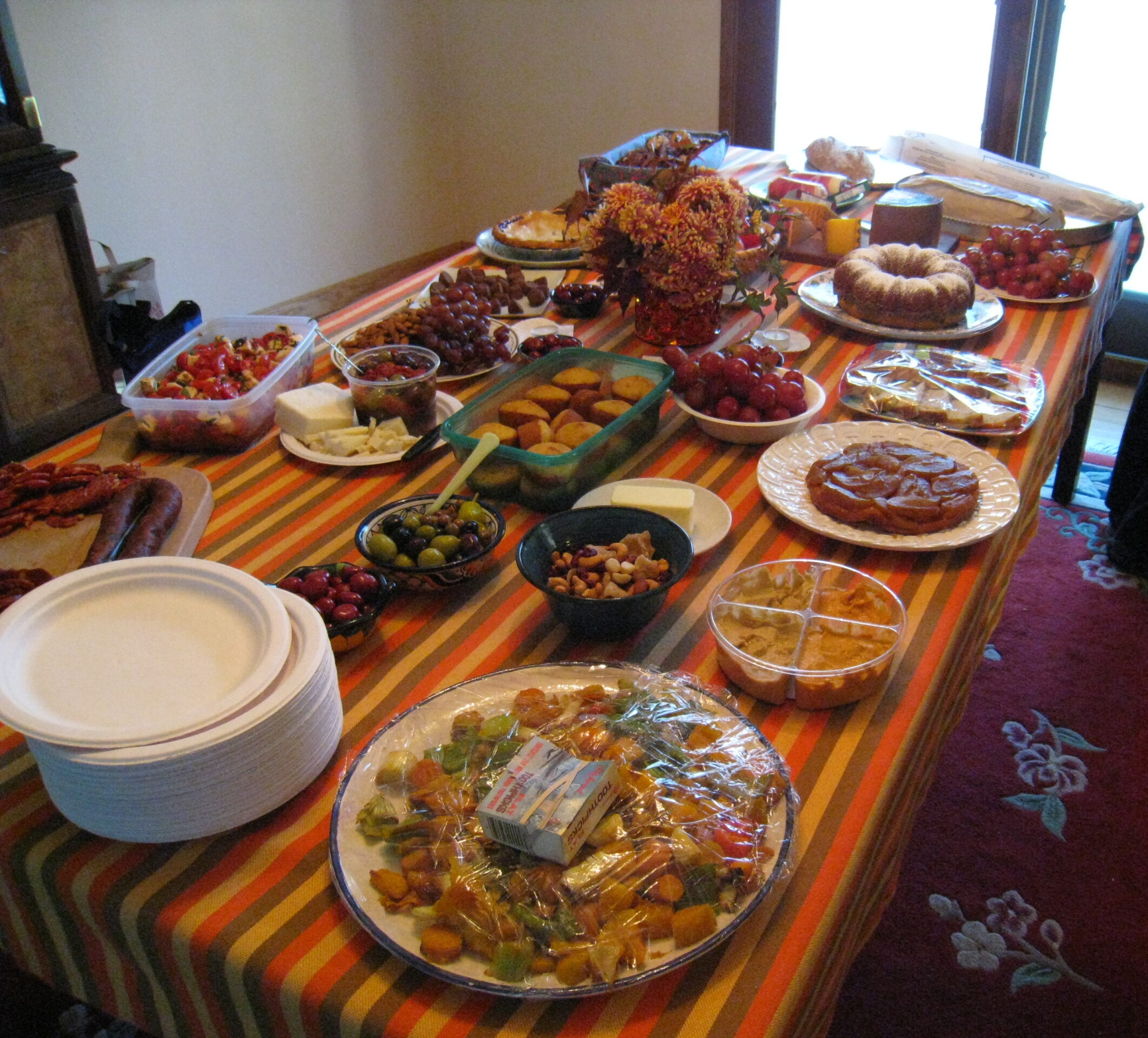
#4. Shell Ceremony & Potluck – Saturday, March 21, 10:00 AM – 3:00 PM, Oakland, California. Northern California Chapter – American Pilgrims On the Camino. “Help us celebrate our pilgrims heading out to the Camino this year at our annual Shell Ceremony & Potluck. We’ll gather at St. Augustine Church in Oakland with Rev. Beth Linde Foot to confer scallop shells (symbol of the pilgrimage) to outbound pilgrims as well as recognize departing volunteer hospitaleros.

“If you’re looking for a quieter, gentler way to experience the Camino Francés, stick around after lunch for a presentation on alternative routes that connect to this classic path. We’ll explore scenic options at the start on the Camino de Baztán and Camino Aragonés, and a peaceful finish by diverting onto the Camino de Invierno. A panel of Camino veterans will share their stories, tips, and insights on these less-traveled, more serene routes.

“Advance online registration is required. Click the Register Now button below to sign up by Friday, March 20. Shell Ceremony & Potluck 2026 Registration Cancellation: If you are unable to attend, please email us at norcal@americanpilgrims.org so we can update our list.

#5. The Trust for Public Land to create “the Yellowstone Heritage Trail”.  A better way to experience Yellowstone starts here. “We’re transforming the abandoned rail line into the Yellowstone Heritage Trail: a 56-mile protected greenway, connecting nearby towns to the park’s northern entrance.

“More than a century ago, a railroad built in 1903 delivered the first visitors to Yellowstone. Over time, the trains disappeared, but the rail corridor remained. Today, Trust for Public Land and our partners are giving that historic route a new purpose. 

“For those who call Paradise Valley home, the trail means safer ways to run errands, meet neighbors, and spend time outdoors. For visitors, it offers a quieter way to explore Yellowstone’s surrounding towns.

 “And the number of people who pass through Yellowstone each year helps show why safe, connected routes matter here.
 https://www.tpl.org/our-work/yellowstone-heritage-trail?s

#6. A handy addition to your first aid kit on the Camino. On our recent Tunnel Tops/Presidio hike earlier, I received a helpful tint from one of our members. “Here is info about the antiseptic I mentioned. This can be a handy addition to your first aid kit on the Camino:  a spray bottle (25 ml) of Chlorhexidine Gluconate (this one seems to be chlorhexidine digluconate, in Spanish). I purchased it at a pharmacy in Spain for around 6 or 7 euros.  It is great for spraying on cuts, abrasions, or blisters. According to ChatGPT, the chemical is better than most of what is sold in the USA as a spray antiseptic.  As far as I have been able to determine, it is not available in the US, even through Amazon.  It is small (25 ml), and lightweight.  It continues to kill germs (bacteria and some other nasties) even after it has dried on your skin.

“A pilgrim I met on the Camino had some serious foot issues, and after he sprayed his foot one evening and the next morning, he said he saw significant improvement the next day.  So, the next time you are in Spain, you might visit a pharmacy and show them this photo and pick up a small bottle. A similar product is also sold in other European countries (I saw one with a German label).

“I noticed on the web that 4% chlorhexidine gluconate spray is sold in the US on dog-care web pages (don’t know if recommended for humans). This one by Lusan is 2%.  There is a cleanser available online that is used at hospitals using 4% chlorhexidine gluconate called Hibiclens – but that is a cleanser, whereas the Lusan product is a spray-on and leave-on solution.

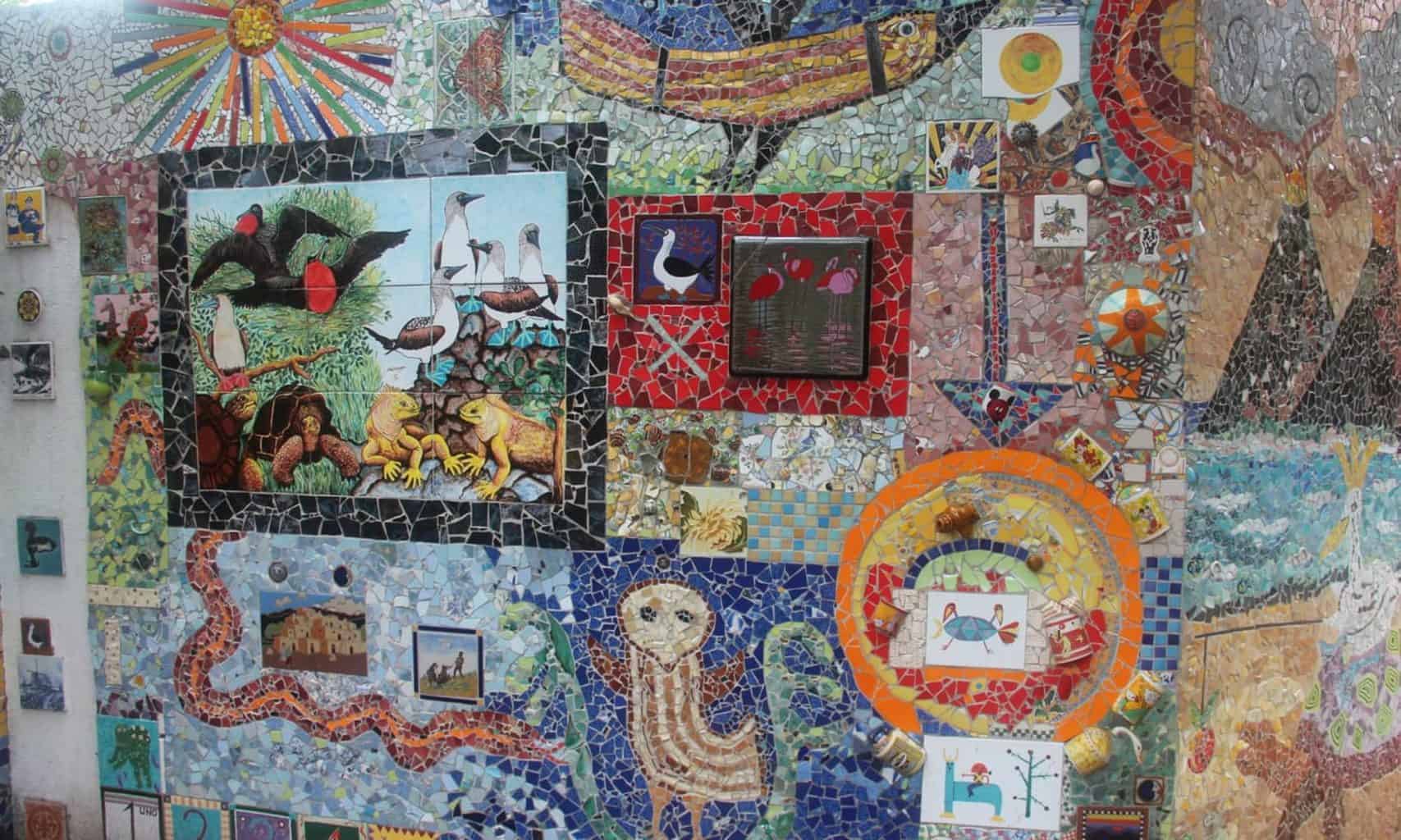
This is where you are--on the Camino Frances!  
This is where you are–on the Camino Frances!

Happy Trails,
Susan Alcorn

Susan ‘backpack45’ Alcorn
Shepherd Canyon Books, Oakland, CA
https://www.susandalcorn.com
https://www.backpack45.com

Author of Walk, Hike, Saunter: Seasoned Women Share Tales and Trails; Healing Miles: Gifts from the Caminos Norte and Primitivo; Patagonia Chronicle: On Foot in Torres del Paine; We’re in the Mountains Not over the Hill: Tales and Tips from Seasoned Women Backpackers; and Camino Chronicle: Walking to Santiago.

Thank you everyone. Stay well, keep hiking when prudent. I encourage you to send in items of interest to the hiking community to me at backpack45 “at sign” yahoo.com

Hiking and backpacking can be risky endeavors. Surely over the last couple of months you have heard, or read about some wilderness rescues. Dayhikes can go bad – people get lost and have to spend the night (nights) outdoors. Always be prepared for emergencies and carry food, water, shelter (warm clothing, etc.), flashlight/headlamp, matches, first aid supplies, and maps. Cell phones don’t always work. Leave word where you are traveling and when you are due back.


Susan Alcorn’s Hiking & Backpacking Newsletter,  June 2025

Susan Alcorn’s Hiking & Backpacking Newsletter,  June 2025
CONTENTS:
#1. Who Knew? Western Gulls
#2. Bear canister requirements and protecting your food (PCTA)
#3. Camino interest: Victoria’s spreadsheets on Camino routes
#4. ALDHA-West Gathering Sept.  26-28. Tickets now available
#5. Good Reading at the Campsite. Timothy Rice’s, The Good Rain: Across Time & Terrain in the Pacific Northwest—and Philip Werner’s, “Hiking over 60: A Modern Guide to Hiking Gear and techniques for Active Adults.”
#6, Regional Bay Area: Crab Cove Sand Sculpture Day
#7. Regional Bay Area: El Cerrito Trail Trekkers: Kensington Path Hike

ARTICLES:
#1. Who Knew?
If you’ve ever seen a Western Gull on one of your coastal hikes, you may have noticed that the adults have a red splotch on the underside of their yellow bill. It’s definitely not blood—but what is it?  Turns out, according to Bay Nature’s Almanac (2025 Spring issue), the red spot is of great use to the young gulls. The chicks are attracted to red–and peck at it the adults’ red spot. That in turn, makes the adult gull, involuntarily, regurgitate, and the chicks eat regurgitated food.

Grizzly in Washington by Susan Alcorn

#2. Bear canister requirements and protecting your food – PCTA. “The number of black bears has increased steadily in recent decades. In California, the bear population has grown from about 10,000 in the 1980s to around 60,000 now. Their range has also expanded. In places where you didn’t use to worry about bears getting your food, there are now bears. Bears are at home in the mountains of the PCT from the southern deserts to the northern border.”
Read more here. 
Also, be sure to read the following article by PCT Staff. Bear-hiker conflicts increasing south of High Sierra on the PCT May 24, 2025

Here are a few tips to remember this hiking season to keep yourself and your friendly neighborhood black bear safe–Excerpt from Inyo National Forest website. How to setup your camp in a bear-safe way.

  • “Always keep your pack and smelly items within reach. Fetching water or taking a bathroom break? If you have a bear canister, set it outside of your backpack. If you do not, keep your pack with you.  
  • The team at BearVault recommends hikers dial in a packing plan before hitting the trail. “Food is one of the heaviest items in your pack, so rather than packing the canister as an afterthought, give it a priority spot close to your back for better balance. In ultralight packs, canisters can even help add some structure. Once at camp, they double as a stool or even a “foam” roller for sore muscles! Many thru-hikers come to love their canisters, and it becomes an essential piece of kit for every backpacking trip.”   
  • For all wildlife, from rodents to ravens to bears, we recommend using a bear canister for your entire journey on the PCT. We strongly recommend carrying one north from Tehachapi to Truckee, CA, in Lassen NP, and in northern Washington. 
  • In a few regions of the Sierra, a “bear hang”, or counterbalance, if done perfectly, is still permitted food storage. This method is extremely difficult to execute effectively and has high failure rates, often due to a lack of appropriately sized trees, insufficient rope, or user error. Ultimately, a bear hang is a delaying tactic- be prepared to defend your food. 
  • Animal-resistant bags may be used to your advantage in Southern California, but note, this is not a permitted food storage method in all areas along the PCT.

For more comprehensive information on food storage along the PCT, please visit Bear canister requirements and protecting your food – Pacific Crest Trail AssociationAuthor: PCTA Staff

#3. Camino interest: This post was originally made on May 2022 on Ivar’s FB group, but info has been added. “Hi everyone! My name is Victoria – some of you may know me from the Camino Portugues Facebook group, where I went viral a few years ago for making an unhinged spreadsheet to map out my Camino… (

“Earlier… I shared in that group that I had built a tool to let pilgrims tinker around with daily distances on the Camino Portugues, and I was overwhelmed by the response. In the course of a few days, I had hundreds of requests to make a similar tool for other popular routes, and I spent all of easter weekend glued to my computer, building exactly that! You can find the tool at: caminoplanner.org

“It’s totally free, ad-free, and always will be (@ivar I promise this is not a commercial endeavour!! I actually am just this big of a nerd.) This started as a silly little passion project because I’m honestly kind of crazy and love playing around with data.

“As of now, the tool can help you plan the Primitivo, Frances, Norte, and Portugues (central + coastal) Caminos. If people want a version for the Camino de la Plata, I’d also be open to building this (but honestly I haven’t had many requests.)

#4, ALDHA-West Gathering Sept.  26-28. Tickets now available. A new location: “he Cal-Wood Education Center is a remote and beautiful mountain site located on 1,200 secluded acres in the Roosevelt National Forest, at 7,700′ elevation. It’s approximately 90 minutes driving from Denver, and approx. 60 minutes from Boulder.  Lodging and meals included.  

“⭐ Our 2025 Gathering will feature: Inspiring Keynote Speakers:
Martin D. Papendick Award for Trail Angel of the Year
Triple Crown Award Ceremony
Legendary Gear Raffle from our generous sponsors
ALDHA-West General Membership Meeting
Plenty of social time with our community

*We have a few remaining presentation slots for the gathering. We’re looking for dynamic storytellers that can inspire and educate our community. Topics can include (but are not limited to) thru-hiking a new long route, trail conservation and advocacy, and new faces and diverse voices that haven’t been previously showcased in our community. Nominate Speakers (click here).  . . . and yes, you can nominate yourself 😎 

“Our events are powered by awesome people like you. It takes a village to make this magic happen. We’ll share more volunteer opportunities in upcoming emails, but right now we’ve got two roles that need help..

*Cal-Wood Service Project: We are organizing a short and satisfying service project to help conserve the Cal-Wood acreage. We are looking for 35 volunteers to roll up their sleeves and make an impact, in exchange for a reduced-price ticket.

    • Time commitment: Friday September 26th, from 2:00 to 4:00 pm.
    • How to Join: If you can fully commit to this project, we invite you to purchase a reduced-price ticket on the gathering ticket page (more information here). Plan to arrive before 2pm on Sept 26th. We’ll outreach to confirm plans with you.

 “Photographer: Help us photograph the Triple Crown Award Ceremony. We need someone to snap photos of each recipient and their award. Plus, you’ll have the best seat in the house. We are looking for a volunteer photographer who can bring their own equipment. “Time commitment: approx. 2 hours on Saturday evening Sep 27th.

“How to Join: If you can help with this job, please email secretary@aldhawest.org and put “gathering volunteer” in the title. We’ll reply and discuss details.

#5. Good reading at the camp site: The Good Rain: Across Time & Terrain in the Pacific Northwest (Vintage Departures) by Timothy Egan (Author). Thank you to FLAKE (trail name) for this recommendation.

Philip Werner’s, “Hiking over 60: A Modern Guide to Hiking Gear and techniques for Active Adults.”  Part of my review: Philips’s Hiking over 60 checks all the boxes. It’s full of helpful advice for those who want to start hiking as well as those that want to resume hiking after a long hiatus. Werner’s website SectionHiker.com has provided hikers with tips and gear reviews for decades.

#6. SF BAY AREA REGIONAL: Annual Sandcastle and Sculpture Contest, Jun 21, 2025. All ages. Drop-In Program. Crown Memorial State Beach (Alameda): Otis Drive Park Entrance. “Description: Enjoy a day at the beach with friends and family, either building a unique work of art or strolling to admire others’ creation.
SCHEDULE: Event: Sat 9:00 AM – 1:00 PM
9am    Registration begins (closes at 11am)
12pm  Judging begins
1pm     Awards ceremony
Categories include castles and sculptures by youth, families, and adults. The event is cosponsored by the Alameda Recreation & Parks Dept., East Bay Regional Park District, Alameda Youth Committee, and the Bay View Women’s Club. Stop by our information table! For more information, click HERE. MAP: Crown Memorial State Beach (Otis Drive Parking Lot)

#7. El Cerrito Trail Trekkers announces Kensington (a small community in the hills) between Berkeley and El Cerrito) Paths Tour, Saturday, July 26, 2025. 10 a.m. to roughly noon. “Visit a set of paths in Kensington that go between streets and were originally created to facilitate access to streetcars and later buses. Guide Rodney Paul will discuss the history of the paths and efforts to secure public ownership by the Kensington Pathkeepers group he’s involved in.  We will see two paths that are blocked and hear about efforts to improve the others. Susan adds: some of these paths down to the buses can also still be found in Berkeley and Oakland hills.)

“The roughly 1.5-mile tour will go at a moderate pace, but much of the route is quite steep, so participants should have a level of fitness to ascend stairs and streets such as Coventry Avenue.  Walking sticks may be useful. “Meet by Raxacoul Coffee and Tea, 299 Arlington Ave. The walk ends at Colusa Circle, where we could lunch at several locales.”

Susan wearing “All Day Carry” backpack by Six Moon Designs

Happy Trails
Susan Alcorn

Susan ‘backpack45’ Alcorn
Shepherd Canyon Books, Oakland, CA
https://www.susandalcorn.com
https://www.backpack45.com

Author of Walk, Hike, Saunter: Seasoned Women Share Tales and Trails; Healing Miles: Gifts from the Caminos Norte and Primitivo; Patagonia Chronicle: On Foot in Torres del Paine; We’re in the Mountains Not over the Hill: Tales and Tips from Seasoned Women Backpackers; and Camino Chronicle: Walking to Santiago.

Thank you everyone. Stay well, keep hiking when prudent. I encourage you to send in items of interest to the hiking community to me at backpack45 “at sign” yahoo.com

Hiking and backpacking can be risky endeavors. Surely over the last couple of months you have heard, or read about some wilderness rescues. Dayhikes can go bad – people get lost and have to spend the night (nights) outdoors. Always be prepared for emergencies and carry food, water, shelter (warm clothing, etc.), flashlight/headlamp, matches, first aid supplies, and maps. Cell phones don’t always work. Leave word where you are traveling and when you are due back.

Susan Alcorn’s Hiking and Backpacking Newsletter, April 2025


Susan Alcorn’s Hiking and Backpacking Newsletter#304 (April 2025)
  • Susan Alcorn’s Hiking and Backpacking Newsletter#304 (April 2025)

    Contents:
    #1. Bay Nature Magazine – Conservation Canines
    #2. THURSDAY, April 10. Camino 101: The Basics
    Everything you wanted to know but were afraid to ask
    #3. For women only: A special Zoom presentation, “Women on the Camino,” scheduled for THURSDAY, April 17.
    #4. Insect Repellents

    Articles:
    #1. Bay Nature Magazine – Conservation Canines. Join Bay Nature Magazine and researcher Karen DeMatteo for a virtual talk about how conservation scientists are teaming up with dogs and their acute senses of smell on Wednesday, May 7, from 12 – 1pm. Conservation detection dogs (CDD) are a valuable, noninvasive tool that has opened doors for ecological and environmental studies, allowing difficult to answer questions to be addressed in a data-driven manner. Come learn about CDDs and how they are driving change for conservation! This talk is free for members and $5 for nonmembers.

    Registration: https://baynature.app.neoncrm.com/np/clients/baynature/eventRegistration.jsp?event=446

    #2. (Still Spots Open)
    Camino 101: The Basics
    Everything you wanted to know but were afraid to ask

    Thursday, April 10, 6:00 – 7:30 PM
    Virtual Zoom Presentation  by the Nor Cal Chapter of American Pilgrims

    Is your head spinning because you’d love to walk the Camino de Santiago but don’t know where to start (both literally and metaphorically)? We’ll screw your head on straight in just one hour. We’ll cover the What and the How, not to mention the Who, Why, Where, Which, and When, and by the time we’re done, you’ll be rearing at the gates, all primed to get started. Presenter: Andy Cohn, seasoned Camino trekker and Northern California Chapter Co-Coordinator

    Here’s what you’ll learn:
    What is the Camino?

    What’s its history?
    Who walks it?
    Why do they walk it?
    What makes it special?
    Overview of the Camino Frances
    Guidebooks / Apps / Websites
    Navigation (Even I can’t get lost)
    Eating (It ain’t about the food)
    Sleeping (Hostals vs. hostels)
    Gear: Going light
    The pilgrim passport and your merit badge (aka the Compostela)
    Shipping or transporting your extra junk
    Getting there and getting around
    Electronics and how to stay connected
    Reserving on the fly (or winging it)
    Money and costs

    There will be time for Q&A after the presentation. This presentation will be recorded and shared with our community.

    Nor Cal Chapter Calendar of Upcoming Activities: https://americanpilgrims.org/la-concha/inspire_events_categories/nor-cal/

    #3. Women on the Camino. Also coming up for the Nor Cal Camino Group, for women only: A special Zoom presentation, “Women on the Camino,” scheduled for April 17. Look for an announcement soon! Panelists to include Laurie Ferris, Susan Alcorn, and Laurie Reynolds. And the possibility that Kate Stewart will be joining in.

    Nor Cal Chapter Calendar of Upcoming Activities: https://americanpilgrims.org/la-concha/inspire_events_categories/nor-cal/

    #4. Insect Repellents: The CDC has recommended insect repellents containing one of the following active ingredients” that are EPA registered: Picaridin, DEET, IR3535,oil of lemon eucalyptus for its synthetic derivative PMD.

    Reminders:
    1.Apply sunscreen first, but be aware that the repellent will reduce the effectiveness of the sunscreen so reapply often.

    2. Apply the repellent lightly – no need for heavy application

    1. If you hands come in contact with the repellent, be sure to wash your hands thoroughly. After you are done with outside activities, wash skin thoroughly with soap and water.
    2. If traveling where mosquitoes carry diseases like malaria, wear long sleeved shirts and long pants tucked into socks. Stay indoors when insects are most active – generally Sleep under mosquito netting if possible.

    Summarized from August 2024 issue of the Wellness Letter. WellnessLetter.Online. com

    *************************

    Happy Trails
    Susan Alcorn

    Susan ‘backpack45’ Alcorn
    Shepherd Canyon Books, Oakland, CA
    https://www.susandalcorn.com
    https://www.backpack45.com

    Author of Walk, Hike, Saunter: Seasoned Women Share Tales and Trails; Healing Miles: Gifts from the Caminos Norte and Primitivo; Patagonia Chronicle: On Foot in Torres del Paine; We’re in the Mountains Not over the Hill: Tales and Tips from Seasoned Women Backpackers; and Camino Chronicle: Walking to Santiago.

    Thank you everyone. Stay well, keep hiking when prudent. I encourage you to send in items of interest to the hiking community to me at backpack45 “at sign” yahoo.com

    Hiking and backpacking can be risky endeavors. Surely over the last couple of months you have heard, or read about some wilderness rescues. Dayhikes can go bad – people get lost and have to spend the night (nights) outdoors. Always be prepared for emergencies and carry food, water, shelter (warm clothing, etc.), flashlight/headlamp, matches, first aid supplies, and maps. Cell phones don’t always work. Leave word where you are traveling and when you are due back.
     

Susan Alcorn’s Hiking/Backpacking Newsletter, Feb. 2025

Susan Alcorn’s Hiking/Backpacking Newsletter, Feb. 2025

Contents:
1. Emergency phone numbers for foreign travelers 

2.“The Retirees Who Hiked Out of Suburbia and into the Long-Trail Record Books”
3. Valley Ventures by Elaine Gorman

4. Movie: Bill Bennet announces: “Save the date to see movie, The Way, My Way.”
5. Pilgrim statistics from the Pilgrim office in Santiago
6. Our “new” National bird
7. Rainy day outing

Articles:
#1. Emergency numbers in Europe and elsewhere: 
The European equivalent to the U.S. 911 emergency line is 112. The UK’s main emergency phone number is 999, but you can also dial 112 or 911 there. Other countries around the world may have different numbers, so it is wise to check that out before you set off for a foreign county.

#2.The Retirees Who Hiked Out of Suburbia….  But first some background information. In 2010, my husband Ralph nominated Ken and Marcia Powers to the California Outdoors Hall of Fame. Ralph and I watched excitedly as they received their award, which was presented by Tom Stienstra, former Outdoors Editor for the SF Chronicle. The Powers had already completed the Pacific Crest Trail, Appalachian, Continental Divide (Triple Crown of American Hiking), and “in 2005, they became the first two people to complete a continuous hike of the 5,000-mile American Discovery Trail, a cross-country route that cuts through major cities and small towns, across towering mountains and into vast prairies.”

Marcia and Ken live in Pleasanton, CA. Marcia contributed to Walk, Hike, Saunter: Seasoned Women Share Tales and Trails.

I recently discovered a more recent article in Outside online bringing us up to 2022. “In their fifties, Marcia and Ken Powers, began long-distance hiking. Lessons they learned on the trail prepared them for the next phase of their lives.” The Story by Grayson Haver Currin here, is well worth reading.

#3. Valley Ventures by Elaine Gorman. I’m doing a little plug for a small publisher because I know how hard it is to get noticed. In January, I heard from author Elaine Gorman, who I met about 15 years ago on a Wilderness Volunteers project in Pinnacles Ntl. Monument. Gorman, who lives in Modesto, is an avid hiker and her book, Valley Ventures, offers 20 hikes that are easily accessible from Stanislaus and San Joaquin counties in the San Joaquin Valley of California.  The narrative hike descriptions include natural and cultural history, mileage, special attractions, directions/drive time, and hiking tips. All hikes are within a two-hour driving range, and include hikes in the San Joaquin Valley, the foothills, and eastern Bay Area.   


Elaine taught science at Mark Twain Jr. High School and Roosevelt Jr. High School in Modesto, retiring in 2009.   She has been a Yokuts Group Sierra Club outings leader for over 30 years, and is a Certified California Naturalist.  She is an avid hiker and backpacker, and spends as much time as possible in the Sierra Nevada, Sierra foothills, Bay Area, and the San Joaquin Valley, exploring the wilderness and nature with her hiking pals. Prior to this book, Elaine wrote hiking stories for California Explorer for several years.   

Elaine is trying to get word out not only about the book, but also that she is interested in giving presentations to local groups, bookstores, organizations.  She is willing to travel to the East Bay as well as the Modesto area. You can contact her at vevado “at sign” yahoo.com


#4. Pilgrim statistics from Santiago. “At the Santiago de Compostela Pilgrim’s Reception Office, we welcome pilgrims who come to the city on foot, by bicycle or on horseback to the tomb of St. James. “The Pilgrim’s Reception Office is run by the Cathedral of Santiago, in the Archdiocese of Santiago de Compostela, and this is where we place the final stamp of the Cathedral of Santiago on the “credenciales de peregrino” (pilgrim’s credentials) and where the traditional pilgrimage certificate is issued, called the “Compostela’”.

https://oficinadelperegrino.com/en/
Peregrinos/Pilgrims: 499,242

Peregrinos/Pilgrims: 499,242
Españoles/Spanish: 208,378
Extranjeros/foreigners: 268,293
(Percent) Españoles: 32%
Variacion año anterior/variation from previous year: +12%

Top five routes:
Francḗs 236,380
Portuguḗs 95,453
Portuguḗs (coastal) 74,758
Inglḗs 28,058
Norte 21,417

Keep in mind that these statistics do not include those who don’t collect the Compostela.

#5. Movie: Bill Bennet announces: “Save the date to see The Way, My Way, coming to a theater near you in March! Here are the Northern California dates on the tour with Bill Bennet and Johnnie Walker Santiago at all of the screenings: San Jose: March 14 Friday; Alameda: March 15 Saturday; Berkeley: March 16 Sunday; San Rafael: March 19 Wednesday; Mill Valley: March 20 Thursday; Sonoma: March 21 Friday; Sacramento: March 22 Saturday; Sacramento: March 23 Sunday. Learn more and see full schedule at: December 28, 2024

“The film will be distributed in the US by Outsider Pictures, and in Canada by A-Z Films. The film will play in every city or town that has a chapter of the American Pilgrims on the Camino.”Jennifer and I will be doing 7 weeks solid of special Q&A screenings throughout the US and Canada, starting in Phoenix / Scottsdale on January 31st. We’ll be joined by Johnnie Walker in late February, and he’ll accompany us doing Q&A screenings in New York, Canada, Washington state, Oregon, and California.

“The film will have its official premiere in Los Angeles on March 7th. Johnnie Walker, Jennifer and I will do a Q&A after the screening.

When you go through this itinerary below you might be disappointed that we won’t be coming to your neck of the woods – but we simply can’t go everywhere – and be assured that the film will most probably be released in a cinema near you regardless.

“Oh, and just to say – when tickets go on sale for these Q&A screenings, don’t dawdle. If you want to see the movie, get your tickets fast. Because if the response is anything like it was in Australia, sessions will sell out quickly. This isn’t some hokey marketing ploy, I’m serious. We literally had people fighting and yelling and screaming in the foyer of the cinema at a few screenings demanding tickets to shows that had sold-out weeks in advance. It was bizarre!”


6. Regarding the “new” American National Bird. I’m still perplexed about this new designation, but great that Congress got together and bestowed the honor of making the Bald Eagle our National Bird.

“The Senate passed the bill with bipartisan support in July. When it passed in the House of Representatives earlier this month, Finstad said in a statement: “Today, we rightfully recognize the bald eagle as our official national bird—bestowing an honor that is long overdue. An eagle enthusiast has been lobbying for the designation for years. On Christmas Eve, President Biden signed legislation making it official.” Smithsonian, Julia Binswanger, Dec. 30, 2024  

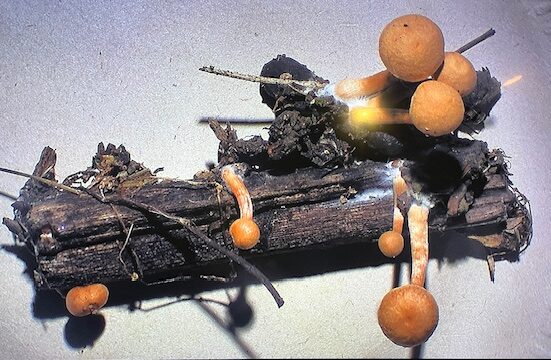
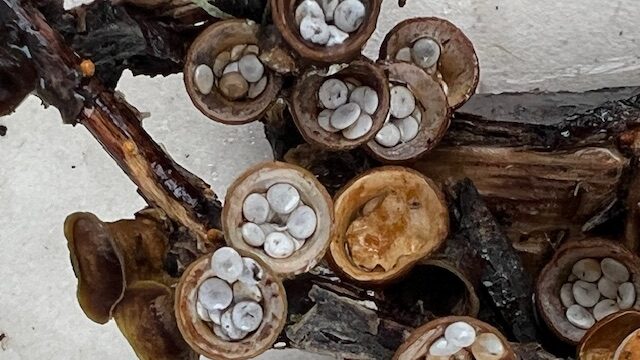
#7.  Rainy Day outing. This morning we woke to rain again so it seemed fitting to head for nearby Tilden Park in Berkeley to see the annual fungus fair, which was inside the visitor center. I know nothing about mushrooms except not to eat (or even touch) them without expert guidance. However. I enjoyed seeing the variety on display today, trying a Snicker Doodle cookie including one variety, and taking a few photos to add to this newsletter.

Cheers,
Susan Alcorn

Susan ‘backpack45’ Alcorn
Shepherd Canyon Books, Oakland, CA
https://www.susandalcorn.com
https://www.backpack45.com

Author of Walk, Hike, Saunter: Seasoned Women Share Tales and Trails; Healing Miles: Gifts from the Caminos Norte and Primitivo; Patagonia Chronicle: On Foot in Torres del Paine; We’re in the Mountains Not over the Hill: Tales and Tips from Seasoned Women Backpackers; and Camino Chronicle: Walking to Santiago.

Thank you everyone. Stay well, keep hiking when prudent. I encourage you to send in items of interest to the hiking community to me at backpack45 “at sign” yahoo.com

Hiking and backpacking can be risky endeavors. Surely over the last couple of months you have heard, or read about some wilderness rescues. Dayhikes can go bad – people get lost and have to spend the night (nights) outdoors. Always be prepared for emergencies and carry food, water, shelter (warm clothing, etc.), flashlight/headlamp, matches, first aid supplies, and maps. Cell phones don’t always work. Leave word where you are traveling. 

Susan Alcorn’s Backpacking & Hiking Tales & Tips, Nov. 2024

Susan Alcorn’s Backpacking & Hiking Tales & Tips, #297. Nov. 2024

Happy Thanksgiving to all!

Contents:
1. Basic information on Camino Spanish Culture

2. Camino interest: Somewhere Along the Way
3. Looks like three PCT miles to gain greater protection?
4. Opinion on the boot vs trail runners question
5. Tara Dower sets a new Fastest Known Time (FKT) on the Appalachian Trail
6.Wild turkeys
7. Regional: East Bay Regional Parks
8. Ferry Rides to S.F. – including some free ones.

9. Our latest Ridge Trail hikes: Doris Klein, Sugarloaf Ridge, Bothe-Napa Valley 

Articles:
#1.“Spanish Culture for Pilgrims: What to Know Before You Go”. Iowa Chapter Coordinator, Dr. Dawn Bratsch-Prince’s presentation on Spanish culture. From the American Pilgrims on the Camino (American Pilgrims). Bratsch-Prince shared her popular talk from this year’s Annual Gathering, Spanish Culture for Pilgrims: Everyday Cultural Norms. “In this video, Dawn highlights 10 basic cultural concepts every pilgrim should know before starting a Camino journey in Spain.”  Camino Spanish Culture for Pilgrims.

My rating: I think this video is a good one for new pilgrims (and some who are more experienced ones) because it covers some basics. And, although most of us who have already walked the Camino learned quickly that restaurants in Spain operate on a different time schedule than here in the U.S. However, those who have walked only in Galicia (which includes Sarria, a popular starting point), may not have learned about the culture and customs of the other 16 autonomies regions of Spain.

I like that Dawn covers the basics well, but it also reminds me of what is missed when travelers do not go beyond social media to gather information. Most questions on the Camino forums are about what to pack, what shoes to wear, where to start a Camino trek, where to stay/where to eat, etc. All of which can be useful information, but I think that something is lost when travelers don’t read books or articles (or watch documentaries) that go deeper into the history, culture, of where they are walking.  

#2. Somewhere Along The Way – TRAILER. Jane Tishkoff, member of the Northern California Pilgrim Group, recently posted on FB. “I had the privilege of walking with Dan Mullins, his wife, sister and 35 other Pilgrims as we walked from León to Santiago Spain in May”–(a 300+km walk). “After losing his voice and being told he would probably never sing again, he not only sang, but he wrote new songs and gave concerts nearly every night after we walked, and recorded an album which debuts on October 6th. Simon Burn is making a documentary about the walk which will hopefully be out by year end, or early next year. It’s going to be a joyous Camino movie, and we are all anxious to see it when it’s finished. Enjoy the trailer!” Documentary – Somewhere Along The Way – TRAILER  

#3. The Pacific Crest Trail news. A deal to conserve three miles of the trail looks like it may be wrapped up soon. “Deal Conserves 3 miles of the Pacific Crest Trail” Gregory Thomas, Sf Chronicle.  By Gregory Thomas, Travel & Outdoors Editor, Oct 17, 2024. 

Though the PCT passes through the area in question, it (and the rest of the 7,000 acres in the deal), it doesn’t belong to the PCTA (association). This new deal will conserve a parcel between Castle Crags State Park and Trinity Alps of Northern California. $5.3 million has already been brokered by the Trust for Public land, and the remaining amount to be paid, expected to be about $6 million, “is expected to come from the Federal Land and Water Conservation Fund).”

This particular property has been owned, and logged, by the Sierra Pacific Industries. A very good sign that the entire conservation project will be achieved is that about half of the acreage is already being “ecologically restored,”— tearing out much of the paved roads, improving drainage to favor wildlife (including fish), and more.

More info: Unprotected gaps in the trailAs of 2024, hundreds of thousands of corridor acres and over 150 miles of the trail are still in private ownership and are susceptible to development, creating fragments in the corridor, and blocking the ability for plants and animals—and people—to navigate through. To create a connected corridor, the PCT must be fully conserved.” 

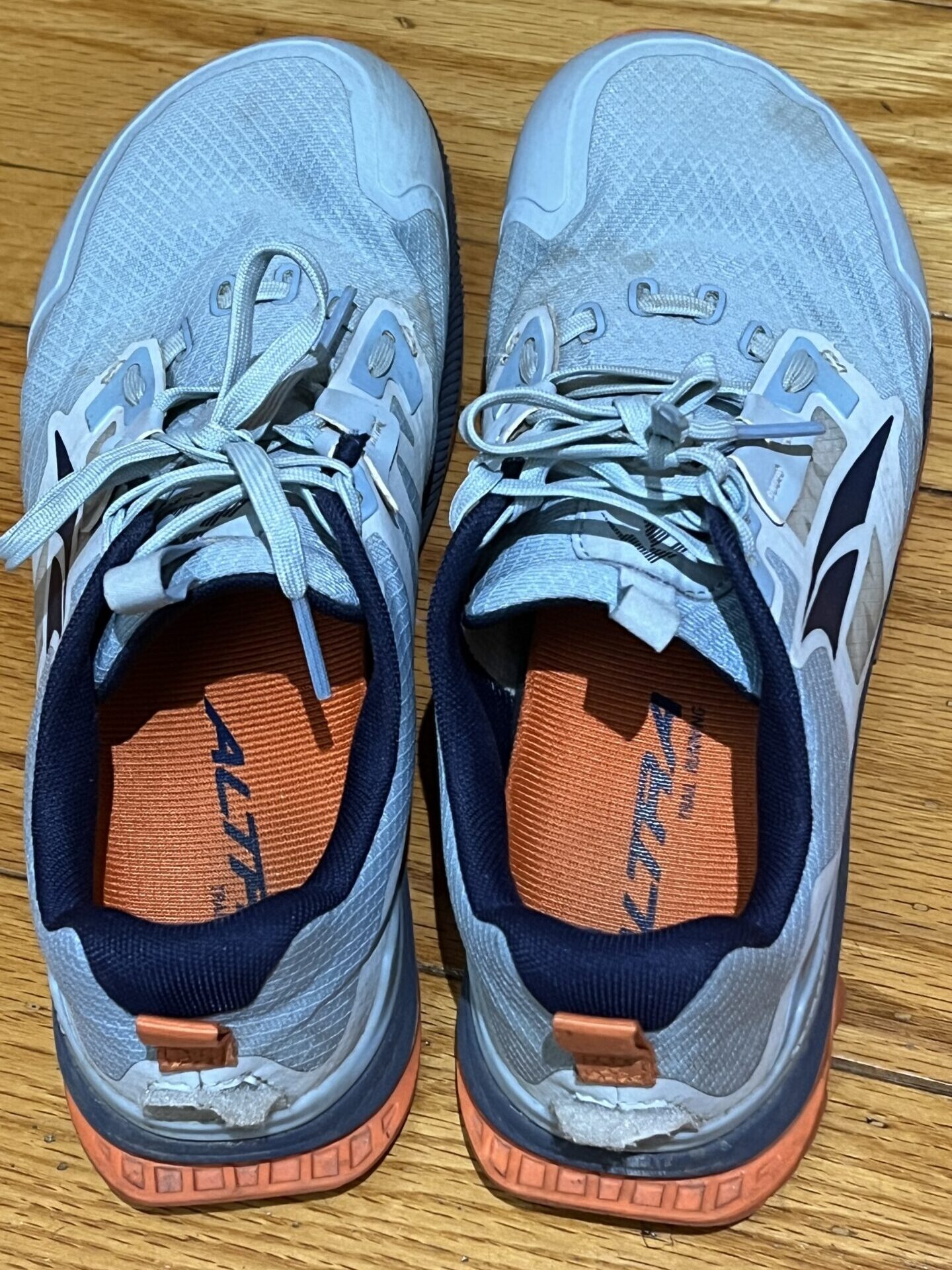
#4. Boots/Footwear: When Ralph and I did our first Camino hike, from Roncesvalles, in 2001, I wore boots. We had literally just completed another section hike of the Pacific Crest Trail/JMT and so I had no reason to think I would have foot problems elsewhere. But I soon developed blisters. Luckily, we were helped by a French woman, also on the trail, who told us about cloth tapes we could use.

Altra Lone Peak

Tape one was Medipore (brand name in U.S.), a soft, 1” surgical tape, that was/is great for wrapping sensitive toes individually. Tape two was Omnifix (elastic), which is a 2” medical tape that I wrapped all the way around the ball of my foot because I could cover my sensitive bunions. Both (or similar tapes) are available on Amazon and elsewhere and probably in most Farmacias in Spain.

As Ralph and I continued going back to Europe to walk other Camino routes, we noticed that most Europeans (most of whom had walked from home), continued to favor boots. But in the U.S., long-distance hikers increasingly were switching to trail runners. We soon joined them and have never looked back! I still wrap sensitive parts of my feet on some long-distance walk, but in general, I don’t need to). I’m not aware of anyone gathering statistics on footwear on the Camino–if so they would need to add sandals, but by observation, I have seen increasing number of people going for the lighter shoes. 

My socks have changed too. What I now enjoy wearing is ONE pair of socks–the  lightweight ones made by Tilley (Ankle Travel Sock).  Because it’s only one layer, made of a mystery fiber (from Italy), and lightweight, I know this is not the usual advice—but they work for me.

For hikes in the snow, I still go with a double-layer sock—Wrightsock. And recently, I have been trying a new sock, Farm to Feet, which was recommended, and gifted to me, by Jennifer Pharr Davis. They are “US Materials [wool], US Manufacturing, and US Workers.”

#5. Tara Dower: Read on Title Sports’s news that “Records were broken on the trails! Tara Dower (ultrarunner, Tara Dower, now has the fastest known time for completing the Appalachian trail. The Appalachian trail spans along 14 states, 2189 miles long and comes with 465,000 feet of total vertical gain/loss. It took Dower 40 days, 18 hours and 5 minutes. She beat the previous record by 13 hours. Dower averaged 54 miles a day!  With her goal to set the fastest known time, she also wanted to use the opportunity to fundraise for Girls on the Run (a nonprofit organization that hosts running programs for girls across the country). Dower had a goal of $20,000 and so far, she’s raised over $46,000.”  titlenine@mail.titlenine.com

#6. Wild turkeys! According to Wildlife: Wild Turkey Take Off, turkeys can run up to 25 mph for short spurts. (National Geographic. Nov. 23, 2023.). Though  this is not so funny if they are running at people, we do have occasional interesting visits from them. When they first visited us, we didn’t realize they were on the premises. We thought the loud crash on our roof was from a tree branch that had landed. It turned out to be a couple of local turkeys that had flown from a rooftop further up our hill. 

San Francisco Bay Regional:

Sunol Regional Park

#7. As the East Bay Regional Park District this year celebrates its 90 anniversary, we also can celebrate by visiting some of its 127,000 acres in Alameda and Contra Costa County. EBParks is composed of 72 different parks and is the nation’s largest regional park system. 

#8. Richmond Ferry Rides to S.F. – including some free ones. It is a real pleasure, and luxury, to take the ferry from the East Bay to San Francisco. Some people don’t realize what a great city San Francisco is for walking, but there are many fascinating possibilities.

From November 1 to the end of 2024, there’s an additional bonus for you—the Richmond-to San Francisco ferry rides will be free on Fridays. Normally a roundtrip ride is $9.40 (some free or reduced fees for children and seniors). Catch the ferry at 1453 Harbour Way S., in Richmond.

Once you arrive in San Francisco, you can easily pick up the newly designated “Double-Cross San Francisco” trail at the Ferry Buildings and do at least some of its 14.5-miles. 

#9. Latest Ridge Trail hikes. Susan: I’m going to wrap this issue up for this month, but wanted to mention that this is a great time of year to do many of the Bay Area Ridge Trail hikes. Indeed the days are shorter, so plan accordingly, but because some of the sections in the wine country (Napa, Sonoma, Solano) get too hot for comfort in the summer and are now beautiful with fall color, it can be a real treat. We’ve just enjoyed the Doris Klein (trail in the new Patwino Worrtla Kodoi Dihi Open Space Park; Sugarloaf Ridge in Sugarloaf State Park and the Bothe-Napa Valley State Park (including a short section of the Vine Trail of the Napa Valley Trail).
++++++++++++
Thanks for following me and hope you enjoy the news and suggestions.

Susan ‘backpack45’ Alcorn
Shepherd Canyon Books, Oakland, CA
https://www.susandalcorn.com
https://www.backpack45.com

Author of Walk, Hike, Saunter: Seasoned Women Share Tales and Trails; Healing Miles: Gifts from the Caminos Norte and Primitivo; Patagonia Chronicle: On Foot in Torres del Paine; We’re in the Mountains Not over the Hill: Tales and Tips from Seasoned Women Backpackers; and Camino Chronicle: Walking to Santiago.

Thank you everyone. Stay well, keep hiking when prudent. I encourage you to send in items of interest to the hiking community to me at backpack45 “at sign” yahoo.com

Please note: Hiking and backpacking can be risky endeavors. Always be prepared for emergencies and carry food, water, shelter (warm clothing, etc.), flashlight/headlamp, matches, first aid supplies, and maps. Cell phones don’t always work. Leave word where you are traveling and when you are due back.